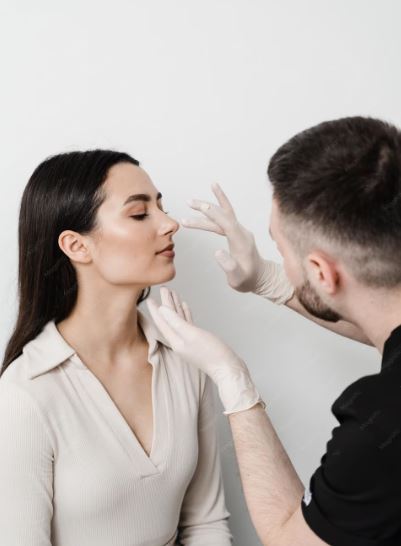
After the dramatic changes of the first few weeks, the month 1–3 period is one of gradual, ongoing refinement. Changes are subtle month-to-month but significant when compared over the full three-month period.
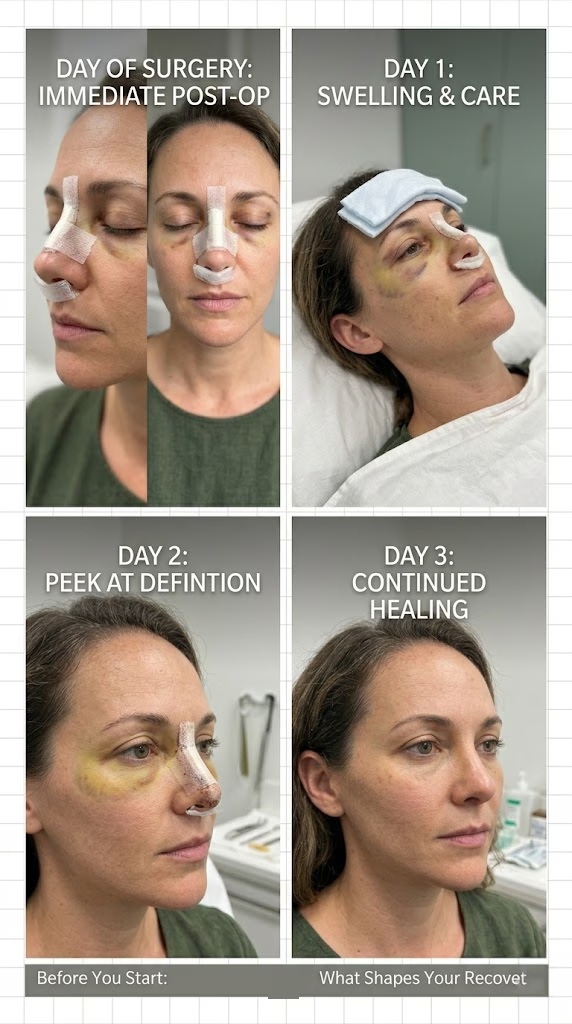
Swelling timeline: Roughly 70–80% of the initial post-operative swelling resolves within the first 4–6 weeks. The remaining 20–30% — concentrated particularly at the nasal tip — reduces very slowly over the following months. Patients are often surprised to find that their nose still looks slightly different at month 2 than it did at month 1. This is the healing process working as it should.
The tip is always last. The nasal tip is the area of the nose that retains swelling the longest after rhinoplasty. This is because the tip has the highest concentration of soft tissue and the thickest skin. Tip swelling can persist as a subtle puffiness, a slight ball-like appearance, or reduced definition for 6–12 months — and even longer in thick-skinned patients. Understanding this prevents unnecessary anxiety at the 2–3 month mark when the tip still looks different from the bridges and sides of the nose that have already settled.
Activity resumption: Light cardiovascular exercise (walking, light jogging) is typically permitted at 3–4 weeks, with clearance from your surgeon. Full gym use, weight training, and upper body exercise can usually resume at 6 weeks. Contact sports — anything with a risk of a blow to the nose — should be avoided for a minimum of 3 months, and ideally 6 months.
Scar maturation: For patients who had open rhinoplasty, the columellar scar (the small incision across the strip of tissue between the nostrils) will be pink, slightly raised, and noticeable during this period. This is normal scar maturation. Silicone gel or sheeting applied to the scar from week 3–4 can accelerate fading. By month 3, the scar is typically flat and beginning to blend. By month 6–12, it is virtually invisible in most patients.
Psychological adjustment: The 1–3 month period is when most patients begin to genuinely appreciate their result. The drama of the early weeks has passed, the nose looks clearly different and better, and the changes are settling into something that looks natural. Some patients go through a brief period of continued anxiety in months 1–2 when swelling has not fully resolved — this is normal and almost always resolves as final results emerge.