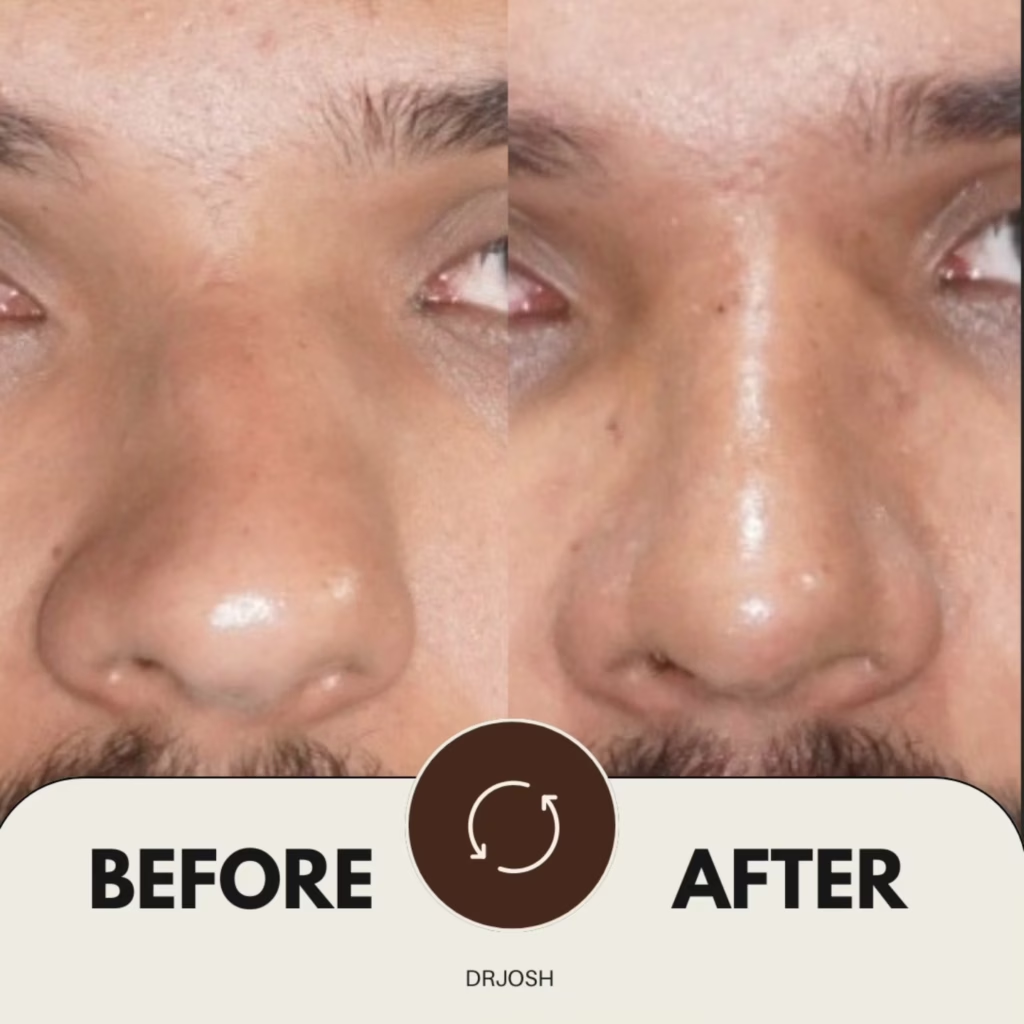
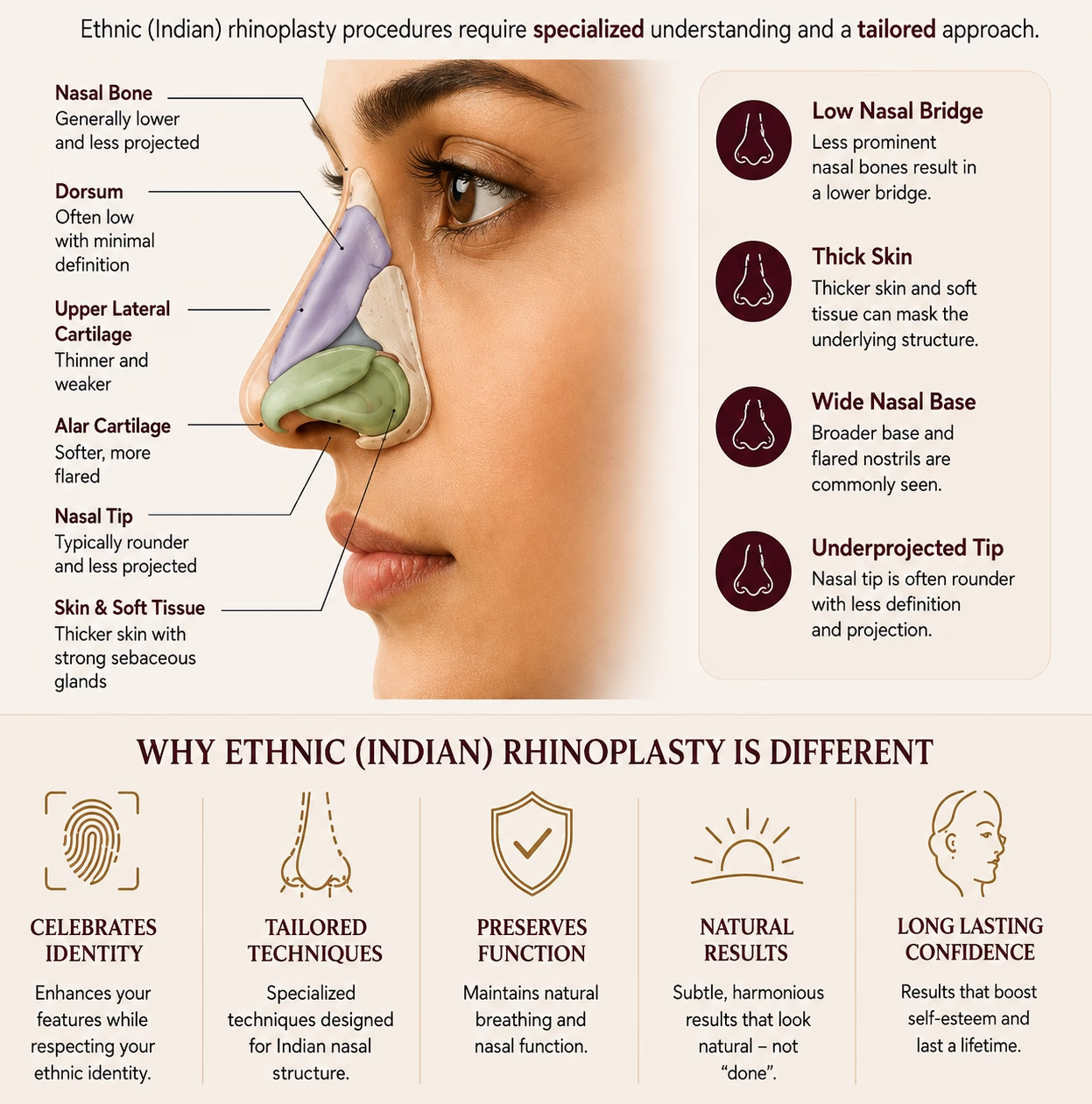
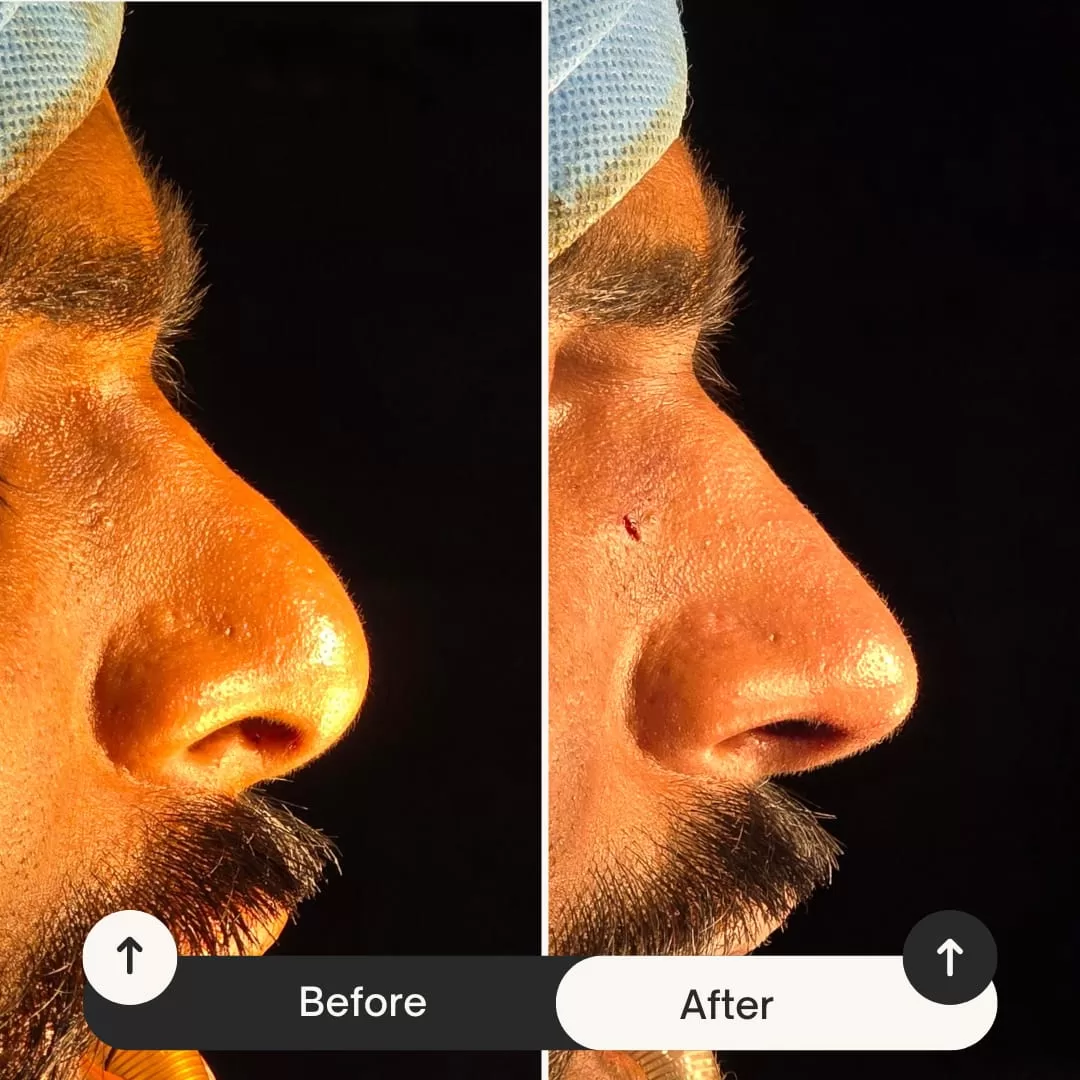
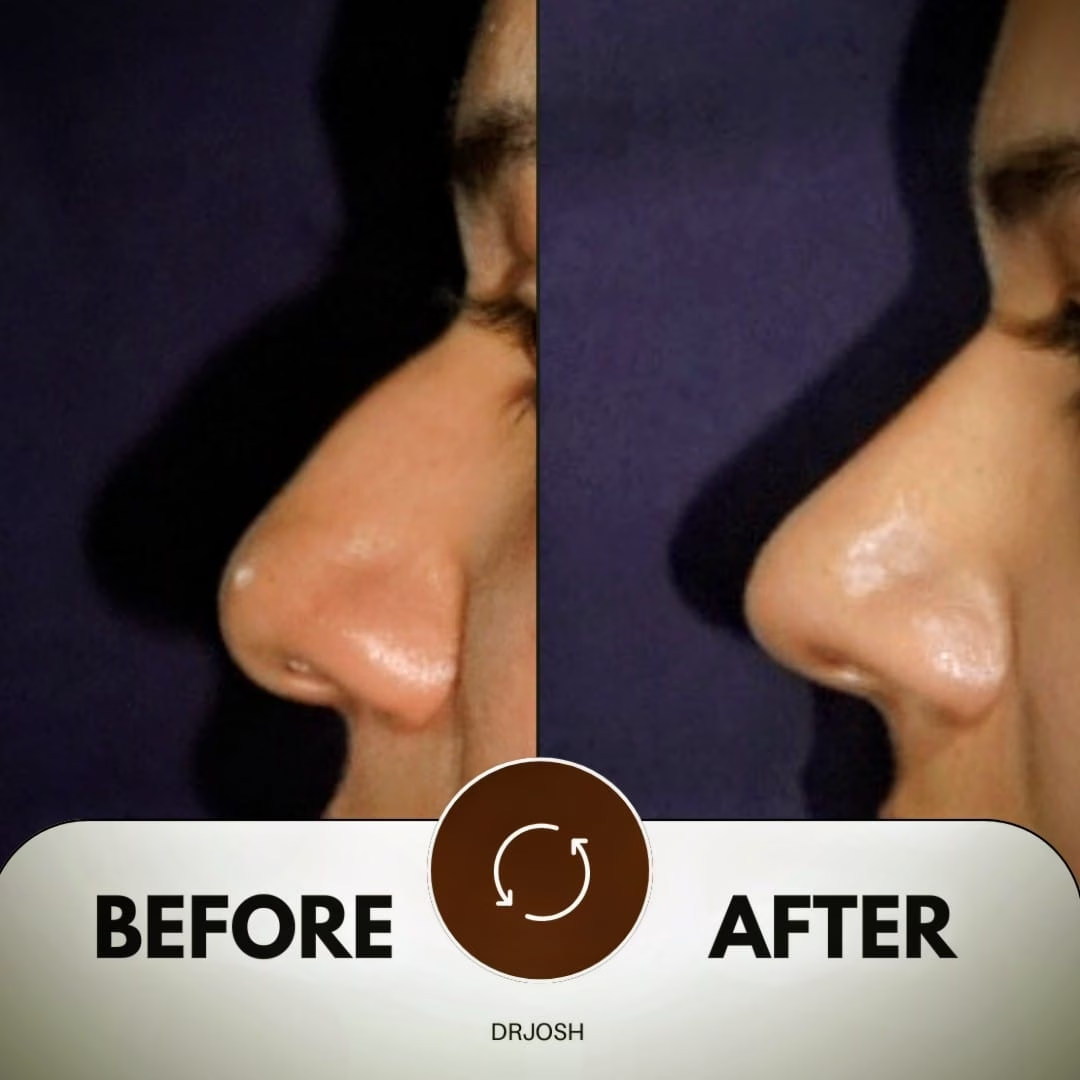
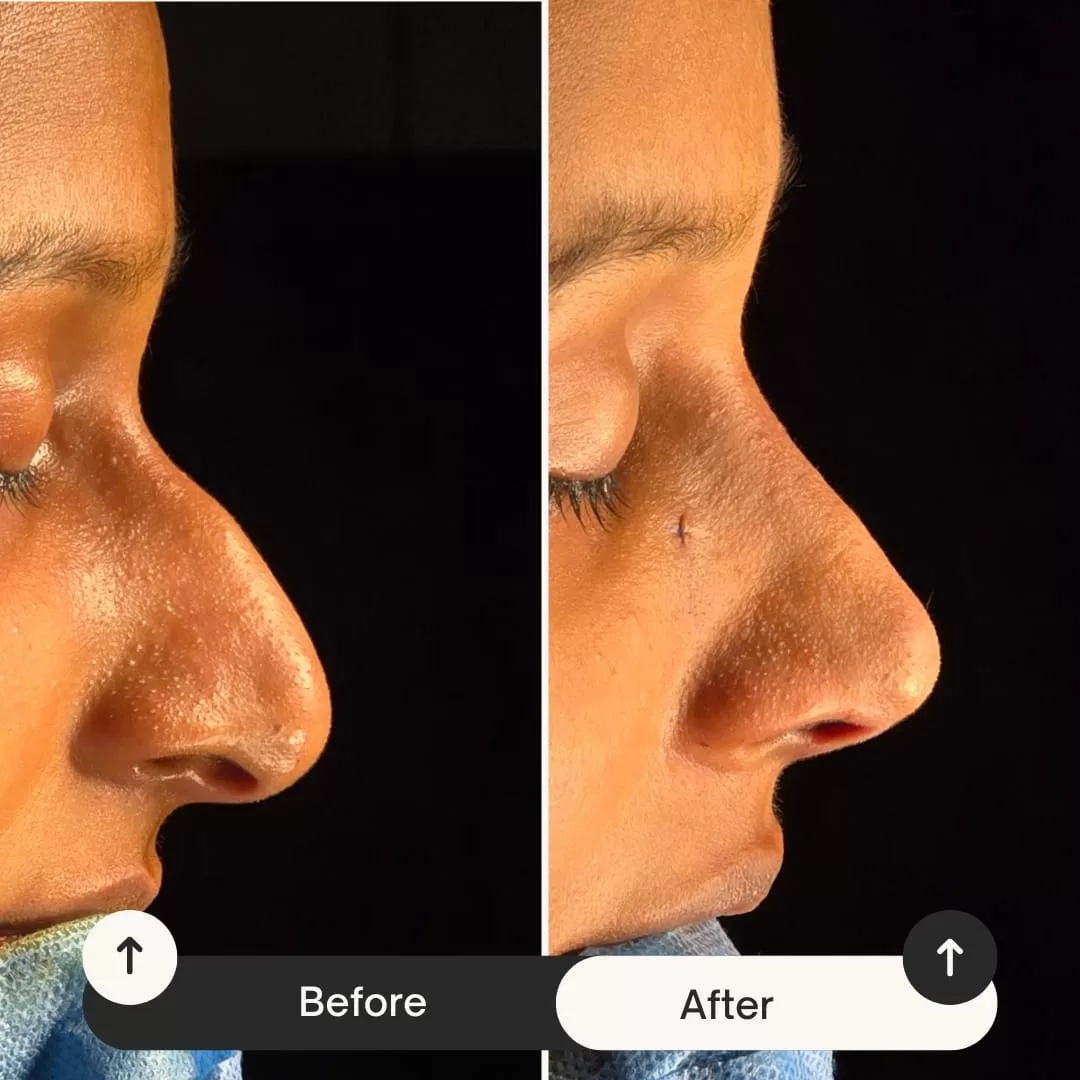
The goal of ethnic rhinoplasty isn’t to erase what makes a nose distinctly Indian — it’s to refine and harmonize it with the rest of the face while preserving natural function and identity. Surgeons who don’t account for these anatomical differences risk two common problems:
1. Overcorrection, where aggressive reduction techniques leave the nose looking too narrow, pinched, or visibly “operated on” against the backdrop of the patient’s other features.
2. Undercorrection, where standard techniques fail to create visible improvement because they weren’t designed for thicker skin and weaker cartilage, leaving patients dissatisfied with subtle or no change. A surgeon experienced in Indian and specifically South Indian nasal anatomy can better predict how tissue will heal, how much cartilage support is needed, and what final shape will look proportionate and natural — not just on the operating table, but a year after healing is complete. This is a core part of Dr. Jyoshid R Balan’s approach to rhinoplasty planning for patients across Kerala.