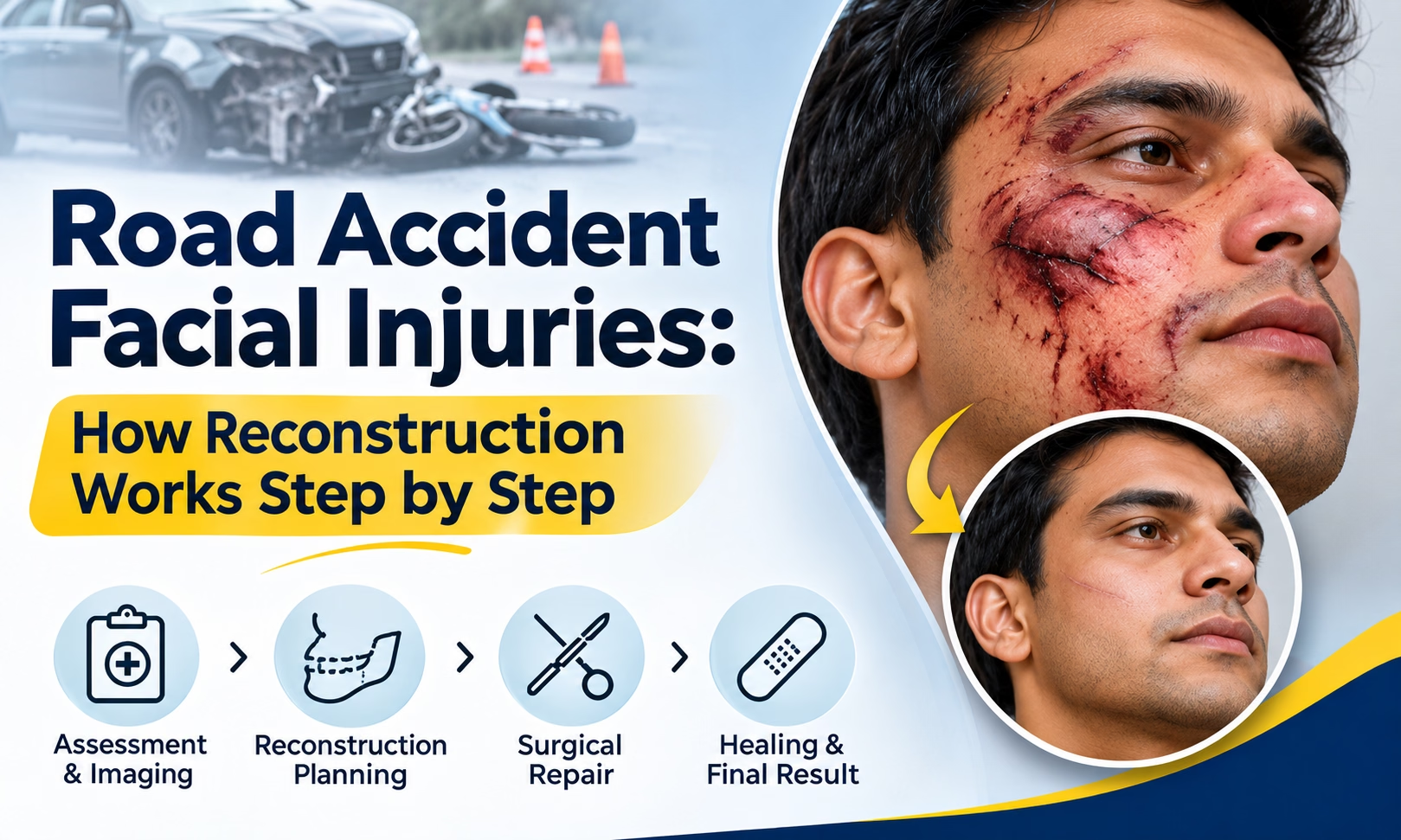
Why the face needs special care after an accident?
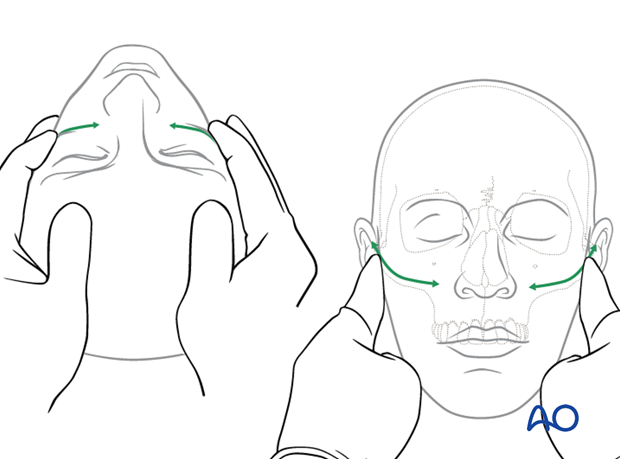
The face holds the eyes, nose, jaws and teeth, and it is how we speak, eat, breathe and recognize each other. In a road accident, a two-wheeler fall, a collision or a windscreen impact, the face often takes the first blow. Injuries range from deep cuts and bruising to broken cheekbones, jaws, eye sockets and nasal bones.
Reconstruction aims for two things: restoring function (breathing, vision, chewing, closing the eyes and mouth) and restoring appearance, so that scars and asymmetry are as small as possible. Plastic and reconstructive surgeons plan both together. This guide explains the process step by step, so patients and families know what to expect.
Step 1: Emergency care comes first
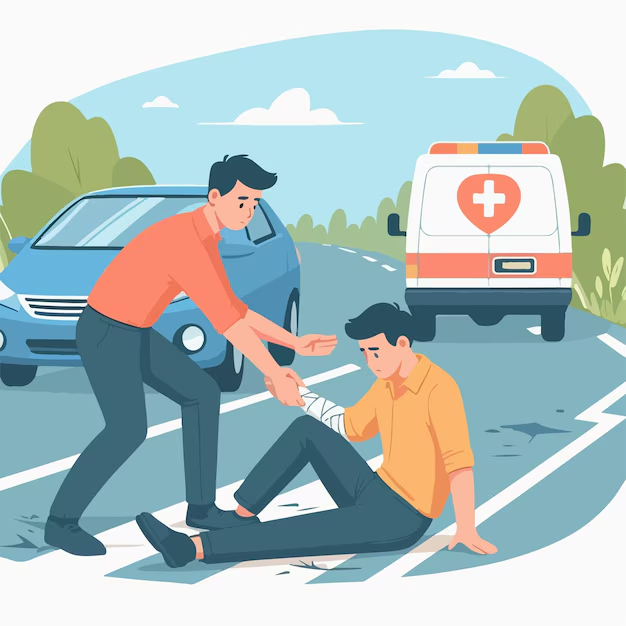
Before any reconstruction, the trauma team protects life. The airway is secured, bleeding is controlled, and head, neck and chest injuries are checked. Facial surgery waits until the patient is stable.
While you wait for help, keep the injured person still, support the neck, and press a clean cloth gently on bleeding areas. Do not push a protruding object back in. Keep any torn skin or tooth in clean, moist gauze and bring it to the hospital.
At the hospital, wounds are cleaned, tetanus protection is given, and antibiotics are started when needed. Deep or dirty facial cuts are best repaired as early as the patient’s condition allows, because early repair usually leaves a finer scar.
Step 2: Scans and the surgical plan
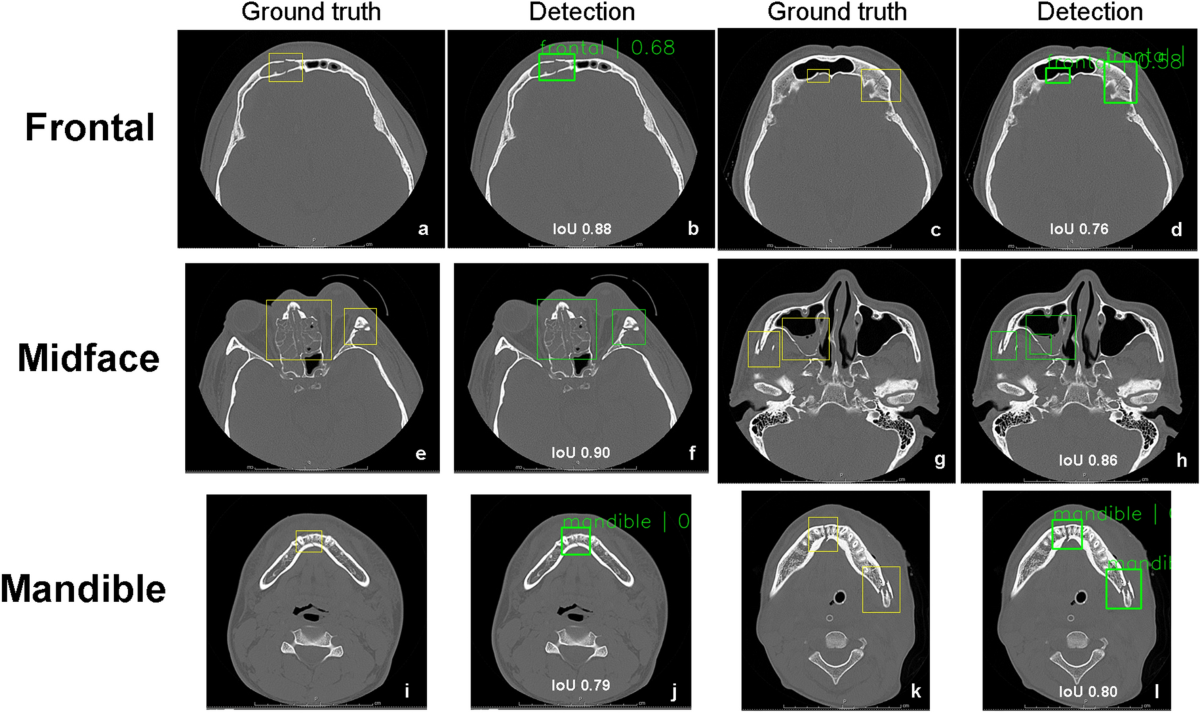
Once the patient is stable, a CT scan of the face shows which bones are broken, how far they have moved, and whether the eye sockets, sinuses or jaw joints are involved. The surgeon also checks vision, eye movement, the bite, facial sensation, and the movement of the forehead, eyelids and lips.
From this, the surgeon builds a plan that sets the order of repair and the timing. Swelling is allowed to settle for a few days when it is safe to wait, since bone repair is usually done within the first one to two weeks, before the bones begin to knit in the wrong position. Families should hear the plan, the number of operations that may be needed, and the likely recovery in plain words.
Step 3: Repairing the facial bones
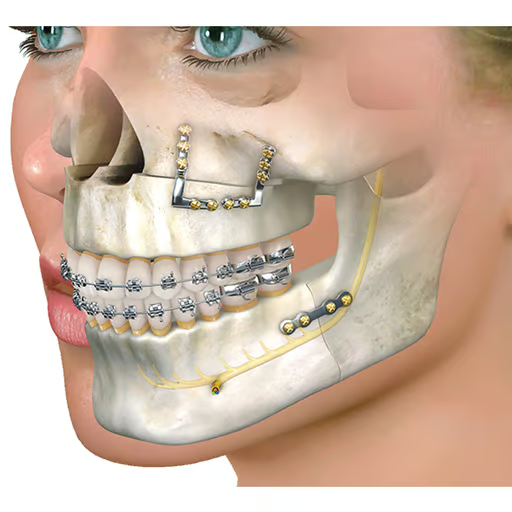
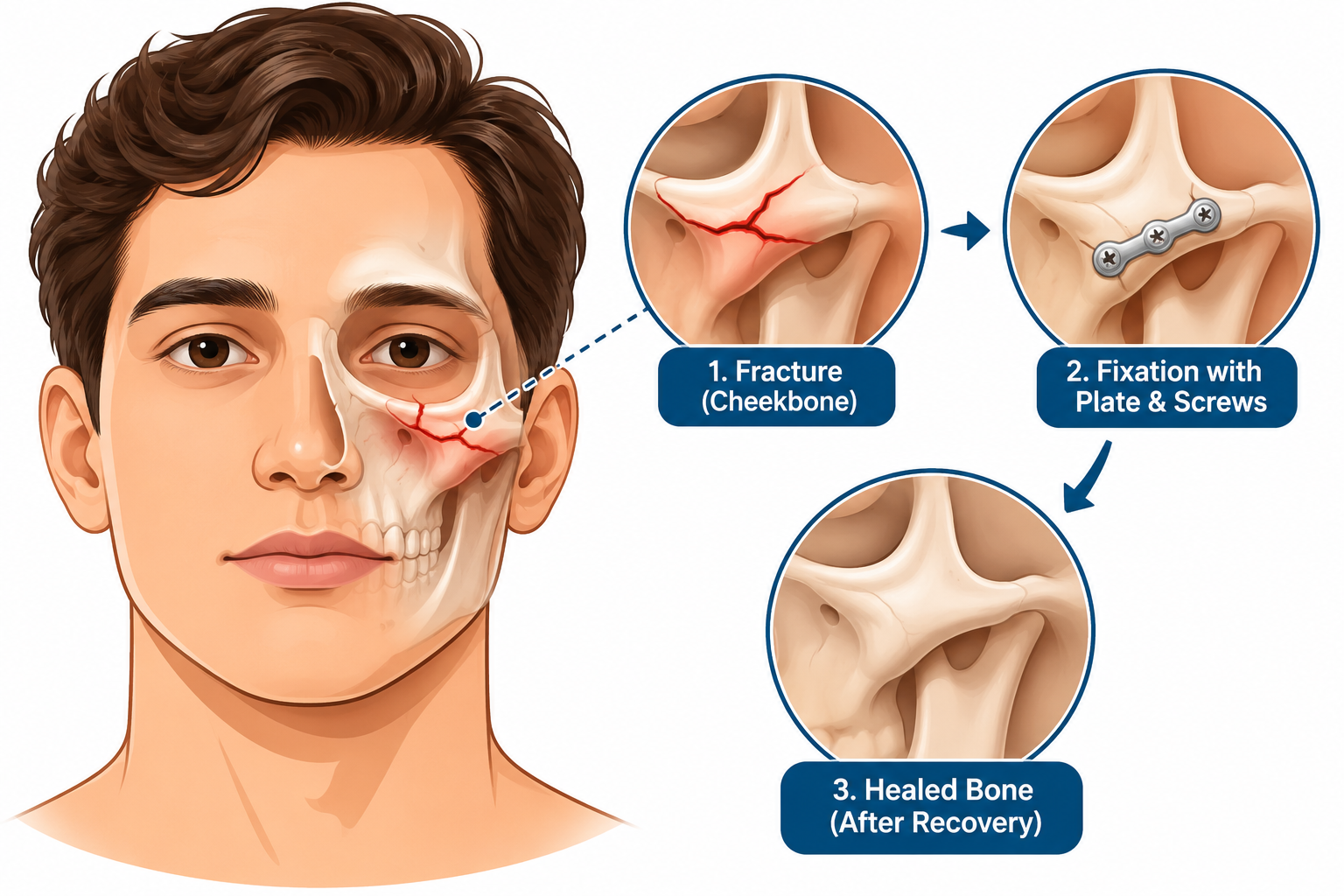
Broken bones are repositioned and held with small titanium plates and screws, placed through cuts inside the mouth, along the eyelid or in hidden skin creases whenever possible, so visible scars stay minimal. Typical repairs include:
- Cheekbone (zygoma): restores facial width and projection and prevents a flat cheek or eye that sits low.
- Eye socket (orbit): repairs the floor or wall so the eye sits at the correct height and double vision is avoided.
- Jaw (mandible and maxilla): realigns the bite so the teeth meet properly. Sometimes the jaws are wired or held with elastics for a short time.
- Nose and forehead: straightens the nasal bones and rebuilds the support of the nose; see nasal reconstruction.
Severe or old injuries that healed crooked may need corrective surgery later, as described under faciomaxillary correction.
Step 4: Repairing skin, nerves and delicate features
Once the bones are stable, the soft tissue is repaired layer by layer: muscle, then deeper skin, then the surface with fine stitches placed along natural lines to hide the scar. Plastic surgeons pay special attention to parts that are hard to rebuild:
- Eyelids and tear ducts: repaired early to protect the eye and keep tears draining.
- Lips: matched edge to edge, including the red border, so the lip line stays even.
- Facial nerve branches: a cut nerve that moves the face may be repaired under magnification.
- Ears and nose: torn cartilage and skin are rebuilt where possible; severe loss may need staged surgery (see ear reconstruction).
- Lost skin: grafts or local flaps cover areas where skin is missing.
Step 5: Recovery, scars and revision surgery
Recovery has stages. These are typical timings only; your surgeon will confirm yours.
| Stage |
Typical timing |
What happens |
| Emergency care |
First hours |
Airway, bleeding control, wound cleaning, tetanus, CT scan |
| Soft tissue repair |
Ideally within 24 hours |
Cuts closed in layers; eyelids, lips and nerves repaired |
| Bone repair |
Usually within 1 to 2 weeks |
Fractures fixed with plates and screws once swelling allows |
| Early healing |
Weeks 1 to 6 |
Swelling falls, soft diet if the jaw is involved, stitches removed |
| Bone healing |
About 6 weeks |
Bones knit; return to normal diet and light activity step by step |
| Scar maturing |
6 to 12 months |
Scars fade and soften; massage, silicone and sun protection help |
| Revision |
After 6 to 12 months |
Scar revision or contour correction if still needed |
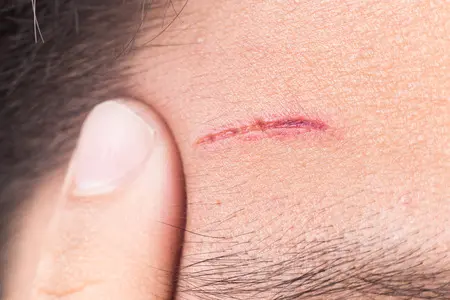
Scars are never invisible, but they can improve a lot with time and care. After they mature, options such as scar revision, fillers or fat grafting can refine the result; see scar treatment.
When to see a plastic surgeon urgently
Go to an emergency department straight away after a facial injury if there is heavy bleeding, trouble breathing, vision changes or double vision, a jaw that does not close properly, loose or missing teeth, clear fluid from the nose or ear, or numbness in the face.
Ask for a plastic surgeon early, since planning the repair in the first days gives the best result.
Frequently asked questions
1. How soon should facial injuries be repaired after a road accident?
Life-threatening injuries are treated first. Deep cuts are best closed within about 24 hours, and broken facial bones are usually fixed within the first one to two weeks, once swelling and other injuries allow.
2. Will I have visible scars after reconstruction?
Some scar is expected. Surgeons place cuts in natural creases or inside the mouth and eyelid where possible, and scars usually fade over 6 to 12 months. Revision is possible later if needed.
3. Will the plates and screws be removed?
Most titanium plates stay in place for life and cause no problem. They are removed only if they cause pain, infection or other issues.
4. How long will I be in hospital?
It depends on the injuries. Simple repairs may need a short stay, while multiple fractures or associated injuries need longer. Your surgeon will explain the plan.
5. When can I eat normally again?
If the jaw is involved, you may need a soft or liquid diet for a few weeks. Your surgeon will tell you when to move back to normal food.
6. Can an old accident injury still be corrected?
Often yes. Crooked bones, sunken cheeks, nasal deformity and scars can be improved with corrective surgery, even years after the accident.
Book a consultation
If you or a family member has a recent or old facial injury, Dr. Jyoshid R. Balan can assess it and explain the options. Visit the contact page, call +91 8113005557, or email drjosh4u@gmail.com.
Clinic: Sushrutha Institute of Plastic Surgery, Elite Mission Hospital, Thrissur, Kerala.